Section III — Goals and Objectives
Overview
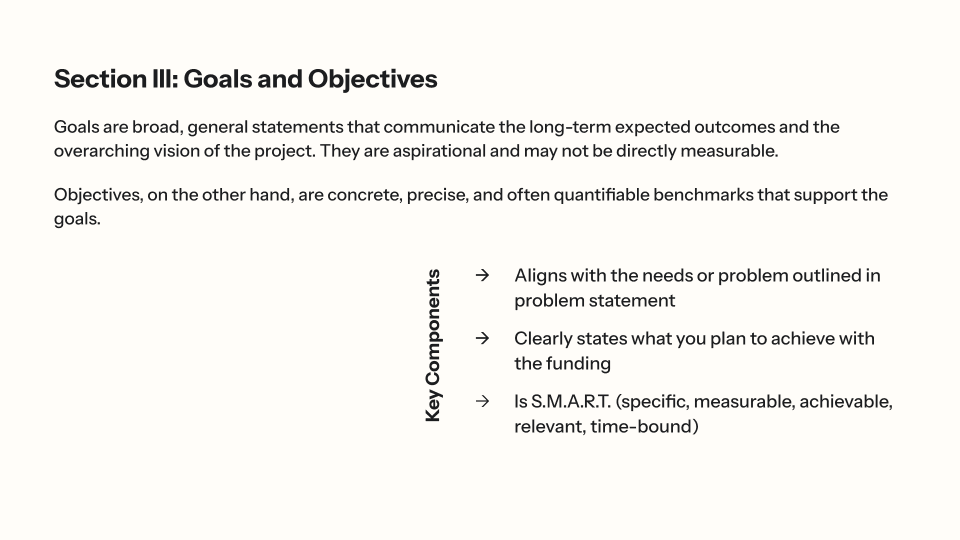
Goals describe the broader direction of your work. Objectives translate that direction into specific, trackable commitments that can be delivered with your current team and resources.
What Strong Goals and Objectives Look Like
Clear – The intended outcome is easy to understand.
Grounded –The direction aligns with the issue you raised in the problem statement.
Measurable – Anyone reading can see what will happen, where it will happen, and who will be involved.
To help with structure, you can use the SMART framework (Specific, Measurable, Achievable, Relevant, Time-bound), but only where it strengthens precision. Avoid inflating the language or overcomplicating your plan.
Example: GridEdge AI's Goals and Objectives
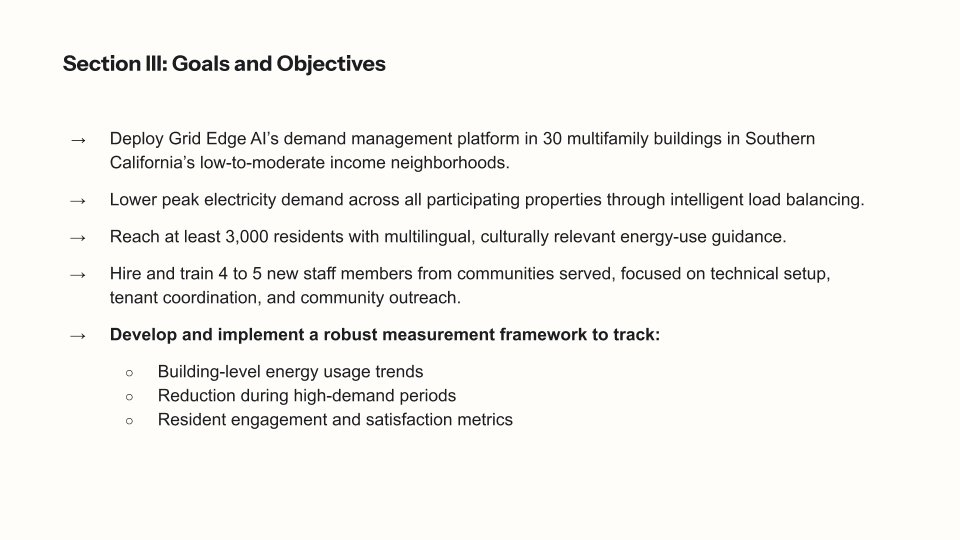
Primary objectives:
Deploy the demand-management platform across 30 multifamily buildings in Southern California
Lower peak electricity demand across all participating properties through intelligent load balancing
Reach 3,000 residents with multilingual, culturally aligned energy-use guidance
Hire and train four to five staff from the communities being served, with roles focused on technical setup, coordination, and outreach
Measurement commitments:
Track building-level energy usage trends
Monitor reductions during high-demand periods
Track engagement and satisfaction across resident populations
Building Your Own Goals and Objectives
Write objectives that are practical and observable:
Where will your work take place, and who will participate?
What changes will the work trigger in your community or system?
What indicators will help you assess whether the work is performing as intended?
Which team members, tools, or partnerships will support delivery?
Reviewers evaluate whether your objectives flow logically from the need you identified and whether they can be accomplished within the scope of the grant.
What's Next
The next lesson covers methods and approach, where you describe how you plan to carry out the work and the structure behind your execution.