Section VI & VII — Evaluation and Milestones
Overview
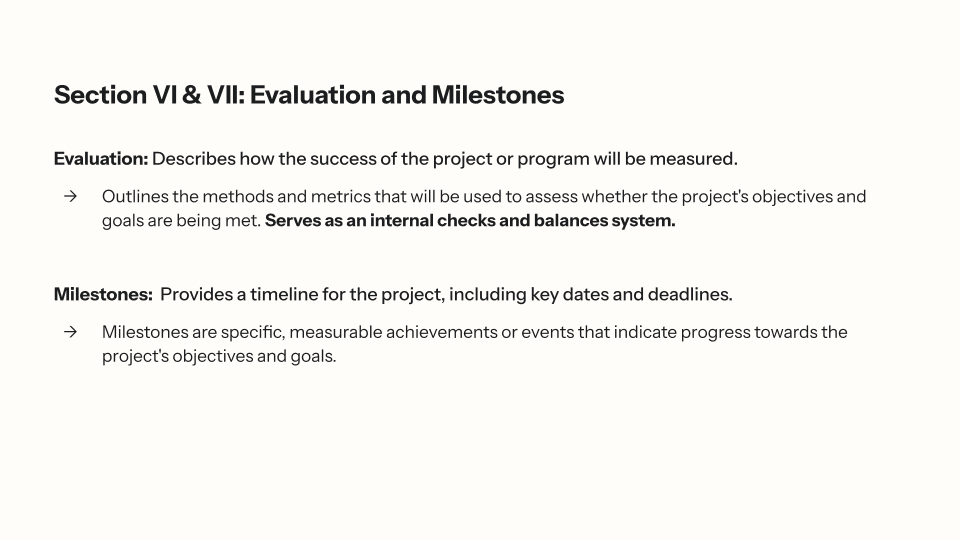
Most grant projects span months or years. Evaluation tracks whether your project is delivering what you promised. Milestones mark when key phases of the work will be completed. Together, they create a system of accountability that shows you're managing the work responsibly and learning as you go.
The Purpose of Evaluation
Your evaluation plan answers three questions funders always ask:
How will you know if the work is succeeding?
What will you do if something isn't working?
How will you prove the outcomes you promised?
Strong evaluation plans don't require academic rigor or expensive consultants. They require honesty about what you're tracking, why it matters, and how you'll use the data to improve.
Quantitative Evaluation: What the Numbers Reveal
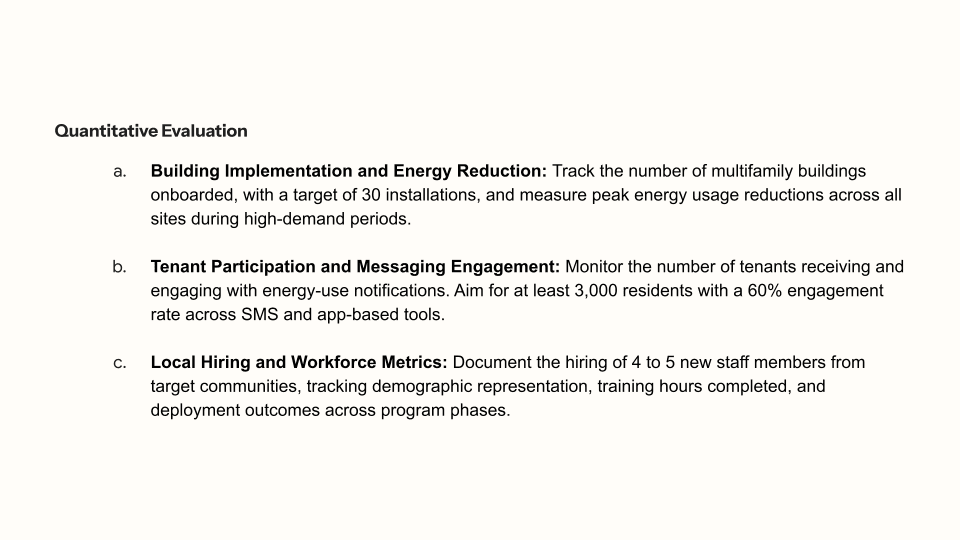
Numbers give funders anchor points. They show scale, reach, and measurable change over time.
GridEdge AI tracks three core metrics:
Building-level energy performance
Number of installations completed, peak demand reductions achieved, and system stability during heat events
Resident reach and engagement
How many people receive notifications, how many interact with tools, and what participation looks like across 3,000+ residents
Local workforce impact
Hires made from target communities, training hours delivered, and skills transferred through the program
Each metric connects directly to a stated objective. Each one can be verified. Each one tells part of the story funders need to hear.
Qualitative Evaluation: What People Actually Experience
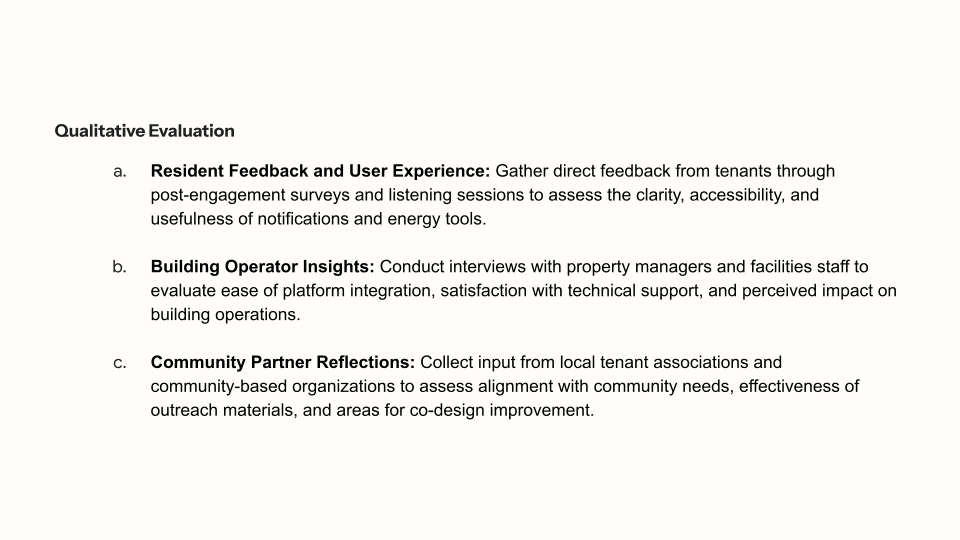
Numbers show what happened. Qualitative data shows how it felt, whether it worked, and what needs to change.
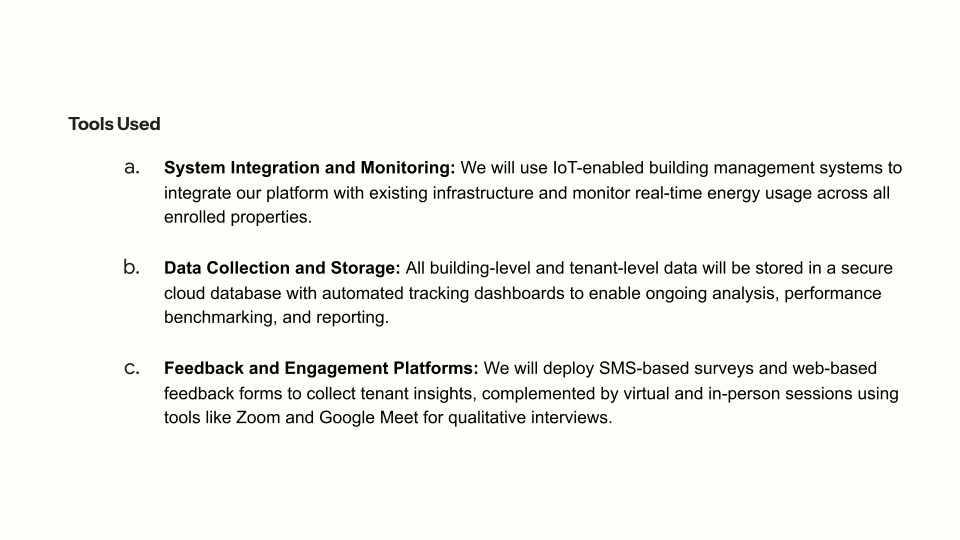
GridEdge AI gathers insight through three channels:
Direct resident feedback
Post-notification surveys, opt-in listening sessions, and SMS-based feedback loops reveal whether tools feel useful or intrusive
Building operator check-ins
Quarterly interviews with property managers surface what's working operationally and where systems create friction
Community partner debriefs
Partner organizations share whether outreach strategies resonate culturally and where trust is being built or eroded
Qualitative data reveals the texture of your work. It catches problems before they scale and highlights moments of genuine impact that numbers alone miss.
Milestones: Proof of Forward Movement
Milestones are commitments. They show funders that you've broken the work into manageable phases and that you're tracking progress at regular intervals.
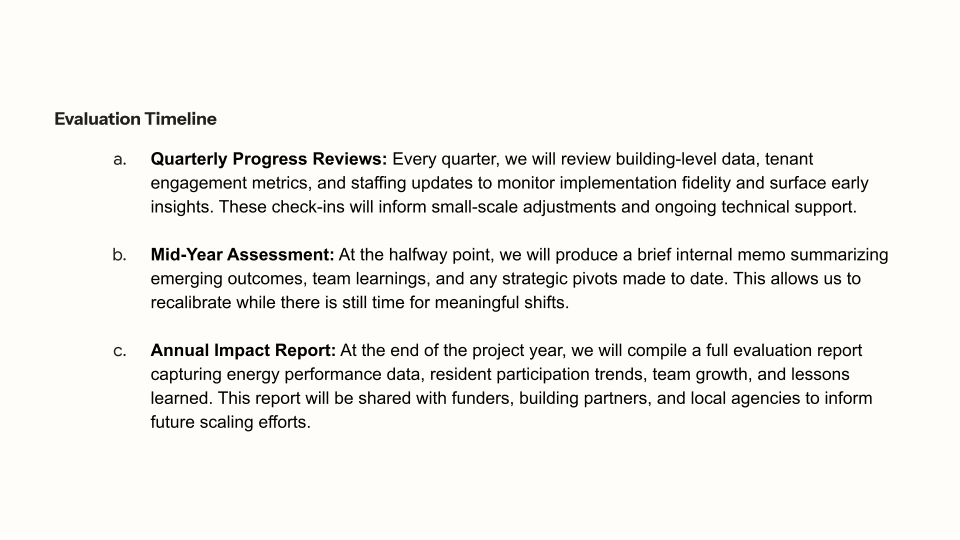
GridEdge AI structures accountability across three checkpoints:
Quarterly check-ins → Review data, surface early challenges, make real-time adjustments
Mid-year assessment → Document lessons learned, identify pivots, recalibrate based on evidence
Year-end impact report → Synthesize outcomes, share findings with funders and community partners
Your timeline should match your project's natural rhythm. Monthly milestones work for fast-moving pilots. Quarterly markers suit longer builds. Annual reports fit multi-year initiatives. Choose the cadence that reflects reality.
What’s Next
The next lesson focuses on highlighting your impact. You’ll learn how to present outcomes in a way that strengthens your proposal and helps funders understand the value of your work.